Professional Radon Testing in Rhode Island
You can't see radon. You can't smell it. You can't taste it. The only way to know if it's in your home is to test.
Radon is a naturally occurring radioactive gas that comes from the soil and rock beneath your home. It can enter through cracks, joints, gaps around pipes, and other openings between the ground and your house. Once inside, radon can build up over time.
That matters here in Rhode Island.
The Rhode Island Department of Health recommends testing homes for radon and states that if a home's radon level is above the EPA action level of 4.0 pCi/L, additional testing or mitigation should be considered.
You don't need to guess based on your neighborhood, the age of your house, or what your neighbor's test showed.
Test your home. Get your results. Know what's in the air.
Why Test Your Home for Radon?
Radon is one of those home problems that can be easy to overlook.
There is no smell coming from the basement. No warning light on the wall. Nothing that tells you there's a problem.
Your home can look perfectly fine and still have elevated radon.
The EPA says radon has been found at elevated levels in every state and that testing is the only way to know whether a home has elevated radon.
That's why we recommend testing rather than guessing.
A radon test can be a smart step if you:
- Are buying a home
- Are selling your home
- Have never tested your home
- Have a finished or frequently used basement
- Have recently renovated your home
- Have changed how you use your lower level
- Had an elevated result in the past
- Want to know your home's current radon level
Even if your home tested low in the past, radon levels can change over time. The EPA recommends considering another test in the future, especially if you change how you use your home or make renovations.
Radon Testing in Rhode Island
Rhode Island is a small state, but radon levels can vary greatly from one home to another.
That means you can't look at a map and know exactly what is happening inside your house.
The Rhode Island Department of Health maintains a radon program and recommends testing residential properties. RIDOH also notes that homeowners, tenants, and certified radon measurement businesses can perform residential radon testing.
Historical Rhode Island testing data shows why local testing matters. A Rhode Island Department of Health report based on more than 43,000 tested homes found that the percentage of homes at or above 4.0 pCi/L varied widely by community. For example, the report recorded elevated results in 9% of tested Providence homes, 13% in Warwick, 17% in Cranston, 25% in Johnston, and 47% in East Greenwich. That data is from 2008, so it should be viewed as historical rather than a current estimate—but it clearly shows that radon levels can differ from one Rhode Island community to another.
The important part is simple: your home's test result matters more than your ZIP code.
How Does Radon Get Into a Home?
Radon comes from naturally occurring uranium in soil and rock.
As uranium breaks down, it produces radon gas. The gas can move through soil and enter a home through openings in the foundation.
Common entry points include:
- Cracks in concrete floors
- Cracks in foundation walls
- Construction joints
- Gaps around pipes
- Floor drains
- Sump pits
- Crawl spaces
- Other openings between the home and the soil
Radon can enter both old and new homes. It can also be present in homes with or without basements.
This is one reason we don't recommend deciding whether to test based solely on your house's age.
New home? Test it.
Old home? Test it.
Finished basement? Test it.
Crawl space? Test it.
When it comes to radon, testing gives you the answer.
Free Instant Quote
We will get back to you as soon as possible.
Please try again later.
What Happens During a Radon Test?
A radon test measures the amount of radon in the air inside your home.
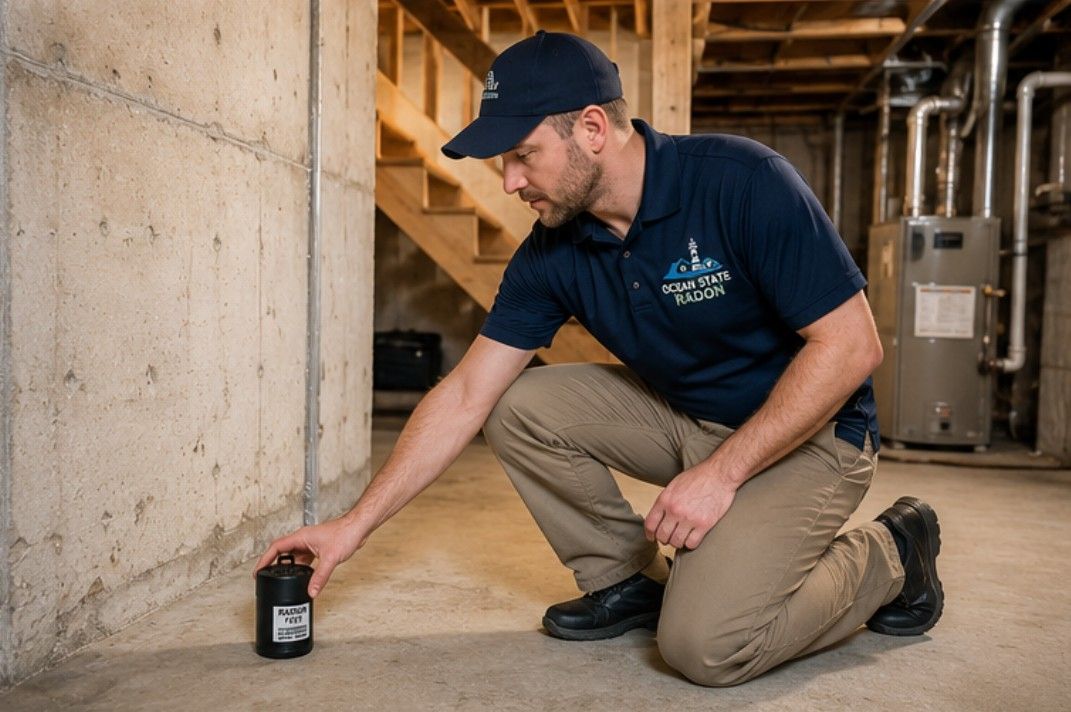
Testing equipment is placed in an appropriate location, usually on the lowest level of the home that is regularly used or could reasonably be used as living space. The equipment needs to remain undisturbed during the test.
The exact testing process depends on the type of test being performed.
Short-Term Radon Testing
Short-term testing is often the best option when you need results quickly.
EPA guidance defines short-term tests as tests that remain in the home from 2 to 90 days, depending on the testing device.
Short-term testing can be useful for:
- Home purchases
- Home sales
- Real estate transactions
- Homeowners who want a quick answer
- Follow-up testing
What Do Radon Test Results Mean?
Radon results are generally reported in picocuries per liter, or pCi/L.
The EPA recommends taking action to reduce radon when the result is 4.0 pCi/L or higher. The EPA also says that radon levels below 4.0 pCi/L still carry some risk and homeowners may want to consider reducing levels between 2 and 4 pCi/L.
Here's a simple way to look at the numbers:
Radon Level What It Means Below 2.0 pCi/LLower level, but not zero risk2.0–3.9 pCi/LEPA says consider reducing the level4.0 pCi/L or higher EPA recommends taking action to reduce radon
A single test result doesn't tell the entire story in every situation. Radon levels can change, which is why the appropriate follow-up test can depend on the initial result and your situation.
If your test comes back elevated, don't panic.
An elevated result doesn't mean you have to move.
It means you've found something that can be addressed.
Radon mitigation systems can reduce indoor radon levels, and homes should be tested again after mitigation to confirm that levels have been reduced.
When Should You Test for Radon?
There isn't one perfect time to test.
If you've never tested your home, now is a good place to start.
Buying a Home
Radon testing is a smart part of the home-buying process.
You're already checking the roof, foundation, heating system, plumbing, electrical system, and everything else that comes with buying a house.
Radon is different.
You can't see it during a walkthrough.
A radon test gives you information that a visual inspection can't provide.
The EPA recommends testing when buying or selling a home.
Selling a Home
Testing before you list your home can help you avoid an unexpected issue later in the transaction.
If you already have a recent radon test, the EPA recommends reviewing the testing conditions and providing the results to the buyer. A buyer may still request a new test if the previous test is not recent, the home has been renovated, testing conditions weren't followed, or the buyer plans to use a lower level that wasn't previously tested.
You've Never Tested Your Home
This is probably the simplest reason to test. If you've lived in your home for years and have never tested for radon, you don't know your home's radon level. And that's okay. Testing gives you the answer.
Radon Testing for Real Estate Transactions
If you're buying or selling a home, timing matters.
You may have an inspection deadline, financing deadline, appraisal, closing date, and a dozen other things happening at once.
Radon testing shouldn't add confusion to the process.
We provide radon testing for homeowners, buyers, sellers, and real estate professionals throughout Rhode Island.