Radon Inspection in Rhode Island
Radon is an invisible, odorless gas that can build up inside homes and other buildings. You cannot tell whether a property has elevated radon by looking at it or smelling the air. A radon inspection should include reliable radon testing so you can understand the level in the home and decide whether you need to take any next steps.
Radon Test Rhode Island helps homeowners and people involved in a real estate transaction learn more about radon testing. We arrange service at the property, so you don't need to bring anything to our Johnston office. To ask about scheduling, call 401-217-5125.
What Is a Radon Inspection?
A radon inspection is an assessment focused on whether radon is present at an elevated level inside a building. The most important part is measuring radon in the indoor air with an appropriate test method. Since radon has no smell, color, or taste, testing is the only way to know the level in a particular home.
The phrase “radon inspection” can mean different things depending on the provider and the situation. Some people use it to describe a radon test ordered on its own. Others ask for radon testing as part of a home purchase or broader property assessment. When booking, ask what the service includes, which test method will be used, how long the test takes, and how results will be delivered.
Radon Inspection vs. a General Home Inspection
A general home inspection looks at visible and accessible parts of a property, such as major systems and building components. It may identify conditions that deserve further evaluation, but a standard visual inspection cannot determine the radon concentration in indoor air.
Radon testing measures the amount of radon in the air using a testing device or method designed for that purpose. Even if a home looks well maintained, has a newer foundation, or has never had a radon issue reported, it can still have elevated radon. A separate radon test provides information that a visual inspection cannot.
When Should You Schedule a Radon Inspection?
Radon comes from naturally occurring uranium in soil and rock.
As uranium breaks down, it produces radon gas. The gas can move through soil and enter a home through openings in the foundation.
Common entry points include:
- Cracks in concrete floors
- Cracks in foundation walls
- Construction joints
- Gaps around pipes
- Floor drains
- Sump pits
- Crawl spaces
- Other openings between the home and the soil
Radon can enter both old and new homes. It can also be present in homes with or without basements.
This is one reason we don't recommend deciding whether to test based solely on your house's age.
New home? Test it.
Old home? Test it.
Finished basement? Test it.
Crawl space? Test it.
When it comes to radon, testing gives you the answer.
Free Instant Quote
We will get back to you as soon as possible.
Please try again later.
Why Radon Testing Matters in Rhode Island
Radon forms naturally in soil and rock and can enter buildings through openings in foundations and other routes. Indoor levels vary from one property to another, including between neighboring homes. You cannot reliably predict a home’s radon level based only on its age, foundation type, neighborhood, or the results from another house.
The Rhode Island Department of Health reports that about one in four homes tested in the state had radon at or above the EPA action level of 4.0 picocuries per liter (pCi/L), based on the state’s 2021 radon data. That statistic describes homes tested in the dataset; it does not predict the result for any individual property. Testing your own home is the practical way to learn its level.
What Happens During Radon Testing?
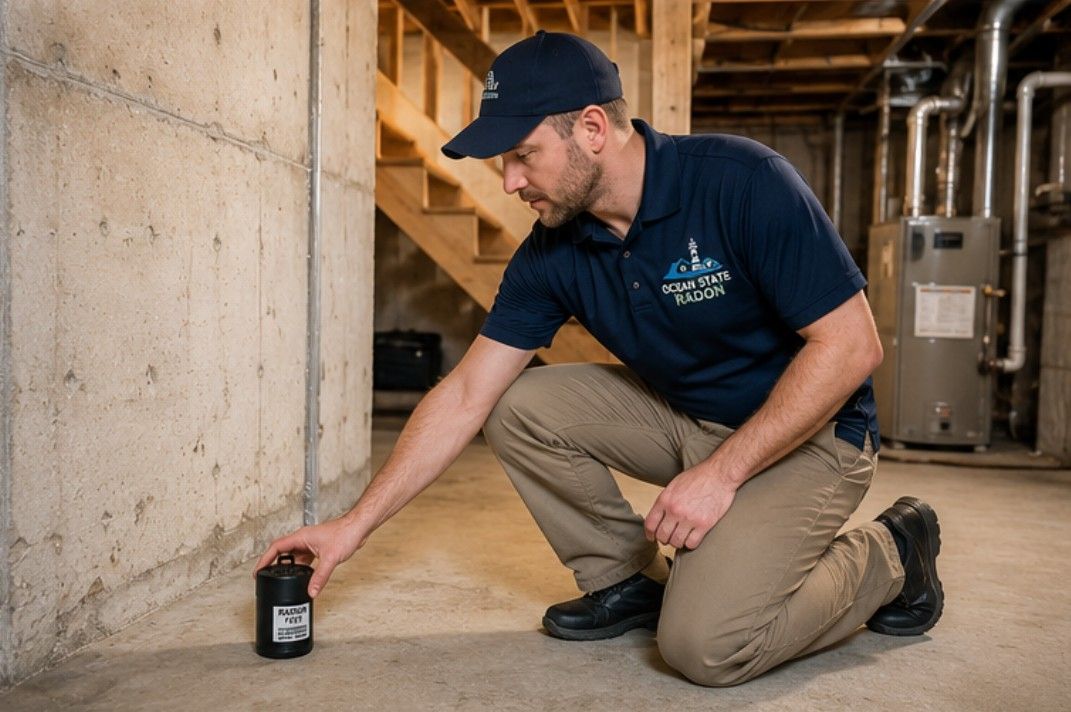
The exact steps depend on the method selected and whether the test is for a real estate transaction or general household information. Before the appointment, ask the provider to explain the process and any conditions that need to be maintained during the test.
Discuss the property and the reason for testing, including any transaction timeline.
Choose an appropriate testing method and location based on the property and the applicable protocol.
Follow the provider’s instructions about doors, windows, heating, ventilation, and keeping the test device undisturbed.
Allow the test to run for the required period. Do not move or interfere with the device.
Receive the results and ask what the reported number means and whether follow-up testing is recommended.
Testing protocols matter. A test performed under unsuitable conditions or with the device in the wrong place may not give a useful picture of the home. If you are testing during a sale or purchase, coordinate with the testing provider and your real estate professionals so everyone understands the requirements and timing.
Understanding Your Radon Inspection Results
Radon results in the United States are commonly reported in pCi/L. The EPA recommends taking action to reduce radon when a test result is 4.0 pCi/L or higher. The EPA also says to consider fixing a home when the result is between 2.0 and 4.0 pCi/L. There is no known completely safe level of radon exposure, and risk generally increases as the level increases.
A result below 4.0 pCi/L does not mean that radon is absent or that there is zero risk. Depending on the result, the testing circumstances, and your plans for the property, additional testing may be worth considering. If a result is elevated, consult a qualified radon mitigation professional about options for reducing the level. Radon testing and radon mitigation are different services; confirm which service a provider offers.
Radon Inspection for Home Buyers and Sellers
For Home Buyers
A radon test can give you useful information before you finalize a home purchase. Ask whether the property has recent results, where and how it was tested, and whether the test followed the applicable protocol. If results are missing, outdated, or not suitable for your situation, you may want to arrange a new test. Discuss timing and access with your real estate agent so the testing can fit the transaction schedule.
H3: For Home Sellers
Sellers may choose to test before listing so they have current information to share with prospective buyers. Keep a copy of the report and any records of mitigation work. If you have prior results, review whether the test is recent and whether anything has changed in the home since it was performed. A new test may be requested by a buyer even when earlier results are available.
For transaction-specific guidance, visit our [Real Estate Radon Testing](/real-estate-radon-testing/) page. Buyers can also learn more on our [Radon Testing for Home Buyers](/radon-testing-home-buyers/) page, and sellers can visit [Radon Testing for Home Sellers](/radon-testing-home-sellers/).
What If the Radon Level Is High?
An elevated result is a reason to take the next step, not a reason to panic. A qualified radon mitigation contractor can assess the property and recommend a system designed to lower radon levels. The appropriate solution depends on factors such as the building’s foundation and construction. After mitigation, testing should be performed to check the result.
Radon Test Rhode Island can help you understand the role of testing and what questions to ask about your result. If you need a mitigation system, make sure you contact a properly qualified and Rhode Island-licensed mitigation contractor. Do not assume that a testing provider also performs mitigation unless that service is explicitly confirmed.